


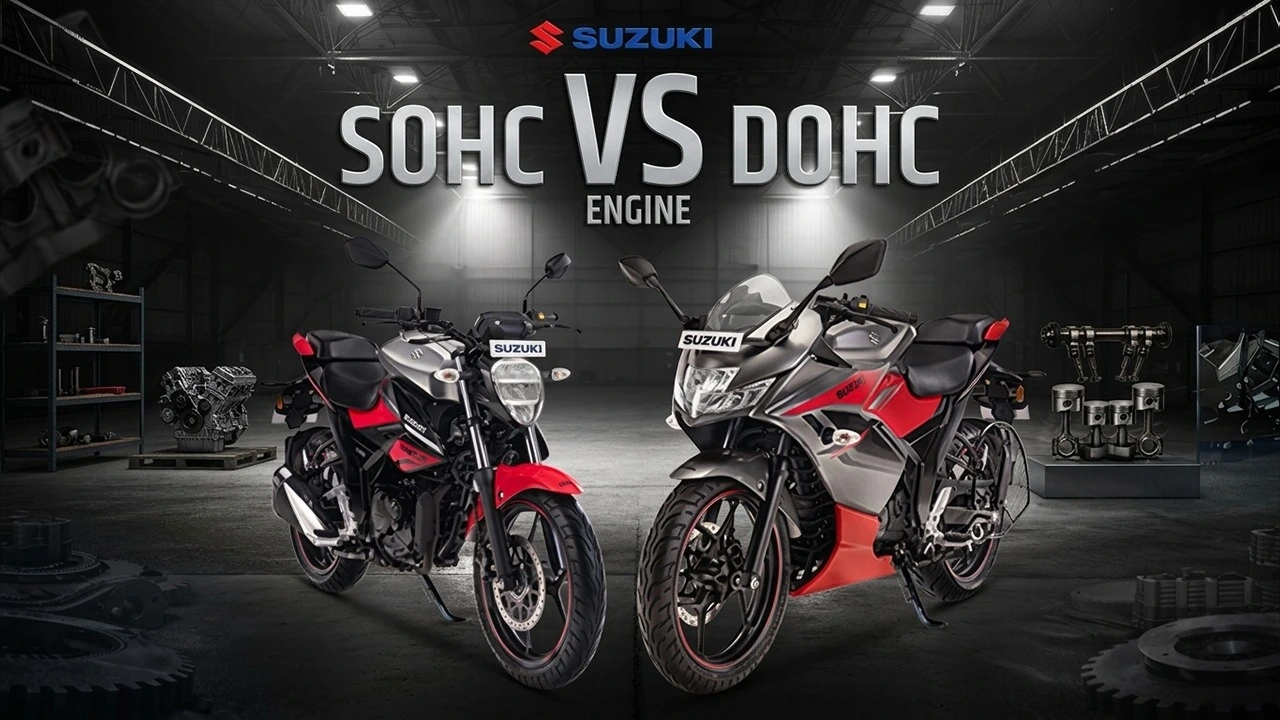
When it comes to understanding how a motorcycle engine performs, one of the most important yet often overlooked components is the camshaft configuration. Whether you are a daily commuter, a touring enthusiast, or someone passionate about performance, knowing the difference between SOHC (Single Overhead Camshaft) & DOHC (Dual Overhead Camshaft) engines can help you better understand your machine and make informed decisions.
In this blog, we’ll break down everything you need to know, from basic definitions to real-world performance differences, while keeping the explanation simple, factual, and relevant.
What Does a Camshaft Do in a Motorcycle Engine?
Before diving into SOHC & DOHC, it’s important to understand what a camshaft does.
The Camshaft is a crucial engine component responsible for controlling the opening and closing of intake and exhaust valves. These valves regulate the flow of air-fuel mixture into the combustion chamber & the release of exhaust gases after combustion.
The Camshaft works in synchronization with the crankshaft using a timing chain though some engine designs may use a belt or gear. This coordination ensures the valves open & close at precise intervals, which directly affects engine efficiency, power delivery, & overall performance.
What Is a SOHC Engine? Meaning and Working
SOHC stands for Single Overhead Camshaft. As the name suggests, SOHC engine uses a single camshaft in cylinder head to operate both intake & exhaust valves.
- Typically supports 2 or 3 valves per cylinder(sometimes 4 in advanced designs)
- Simpler mechanical structure
How It Works:
In an SOHC engine, a single camshaft controls both sets of valves, intake and exhaust. This is often achieved using rocker arms or similar mechanisms to transfer motion from the camshaft to the valves.
Advantages of SOHC:
- Simpler designwith fewer moving parts.
- Lower manufacturing and maintenance costs.
- Better low-end torque, making it suitable for city riding.
- Generally, more durable and easier to maintain.
Disadvantages of SOHC:
- Limited airflow compared to DOHC.
- Lower high-speed performance.
- Less flexibility for advanced valve timing technologies.
What is a DOHC Engine?
DOHC stands for Dual Overhead Camshaft. This design uses two camshafts per cylinder head, one for intake valves and one for exhaust valves.
Key Characteristics:
- Two camshafts per cylinder head
- Typically supports 4 valves per cylinder especially in performance-oriented motorcycles.
- More complex and performance-oriented design
How It Works:
In a DOHC engine:
- One camshaft controls the intake valves
- The other controls the exhaust valves
This separation allows for more precise control over valve timing and positioning.
Advantages of DOHC:
- Better airflow and combustion efficiency
- Often better suited for higher-rpm power and stronger top-end performance
- Supports higher engine speeds (RPM)
- Easier integration of technologies like Variable Valve Timing (VVT)
Disadvantages of DOHC:
- More complex design with additional components
- Higher manufacturing and maintenance costs
- Slightly heavier engine setup
SOHC vs DOHC Engine: Key Differences Compared
Here’s a clear comparison of the two engine types:
| Feature | SOHC Engine | DOHC Engine |
| Full Form | Single Overhead Camshaft | Dual Overhead Camshaft |
| Number of Camshafts | 1 per cylinder head | 2 per cylinder head |
| Valve Configuration | Usually 2–3 valves | Usually, 4 valves |
| Design Complexity | Simple | Complex |
| Cost | Lower | Higher |
| Maintenance | Easier and cheaper | More complex and expensive |
| Power Delivery | Strong low-to-mid range | Strong high-end performance |
| Engine Speed (RPM) | Moderate | Higher RPM capability |
| Fuel Efficiency | Good (depends on tuning) | Optimized with advanced tech |
| Performance Focus | Everyday usability | Performance and efficiency |
SOHC vs DOHC: Real-World Performance Comparison
1. Power Delivery
SOHC engines are tuned to deliver strong low-end torque, making them ideal for:
- City commuting
- Stop-and-go traffic
- Relaxed riding
DOHC engines, on the other hand, excel at:
- High-speed performance
- Better top-end power
- Smooth acceleration at higher RPMs
2. Engine Efficiency
DOHC engines generally offer better airflow and combustion efficiency due to:
- Multiple valves per cylinder
- Optimized valve placement
This results in improved performance and, in some cases, better fuel efficiency when paired with modern technologies.
3. Maintenance and Cost
- SOHC enginesare easier to maintain due to fewer components
- DOHC enginesrequire more precision and can be costlier to repair
This makes SOHC engines more appealing for riders who prioritize affordability and ease of ownership.
4. Complexity and Engineering
The simplicity of SOHC engines makes them robust and reliable for everyday use. Meanwhile, DOHC engines represent a more advanced engineering approach, offering better control over valve timing and performance tuning.
Which One is Better When Made a SOHC VS DOHC Comparison?
There is no one-size-fits-all answer. The choice between SOHC and DOHC depends on your riding needs and preferences.
Choose SOHC if you want:
- A reliable and low-maintenance engine
- Better performance at low and mid-speeds
- Cost-effective ownership
Choose DOHC if you want:
- Higher performance and power output
- Better efficiency at high speeds
- Advanced engine technology
In simple terms:
- SOHC = Practical and efficient for daily use
- DOHC = Performance-oriented and technologically advanced
Why Engine Configuration Matters for Riders Between SOHC and DOHC?
Understanding the difference between SOHC and DOHC engines is not just technical knowledge but directly impacts your riding experience.
- It affects how your motorcycle accelerates
- It influences fuel efficiency
- It determines maintenance costs
- It shapes the overall riding feel
For instance, a rider navigating urban traffic daily may prefer the smooth low-end torque of an SOHC engine, while someone who enjoys highway cruising may appreciate the high-speed performance of a DOHC setup.
The Evolution of Engine Technology
Over time, engine designs have evolved to balance performance, efficiency, and reliability. While SOHC engines continue to be widely used due to their simplicity, DOHC engines have gained popularity with advancements in technology.
Modern engineering innovations, such as improved materials and precision manufacturing, have made both configurations more efficient and reliable than ever before.
Common Myths About SOHC and DOHC
Myth 1: DOHC is always better
Not necessarily. While DOHC engines offer better high-end performance, SOHC engines can be more practical for everyday use.
Myth 2: SOHC engines are outdated
SOHC engines are still widely used and remain relevant due to their simplicity and efficiency.
Myth 3: DOHC engines are always less fuel-efficient
Fuel efficiency depends on multiple factors, including tuning, riding conditions, and technology, not just the camshaft configuration.
Conclusion
The difference between SOHC and DOHC engines lies primarily in their camshaft configuration and how they control valve operation. While SOHC engines offer simplicity, affordability, and strong low-end performance, DOHC engines deliver superior airflow, higher RPM capability, and enhanced top-end power.
Ultimately, both engine types serve different purposes and cater to different riding styles. Understanding these differences allows riders to better appreciate the engineering behind their motorcycles and choose what suits their needs best.
Whether it’s the practicality of SOHC or the performance edge of DOHC, each configuration plays a vital role in shaping the riding experience.
