


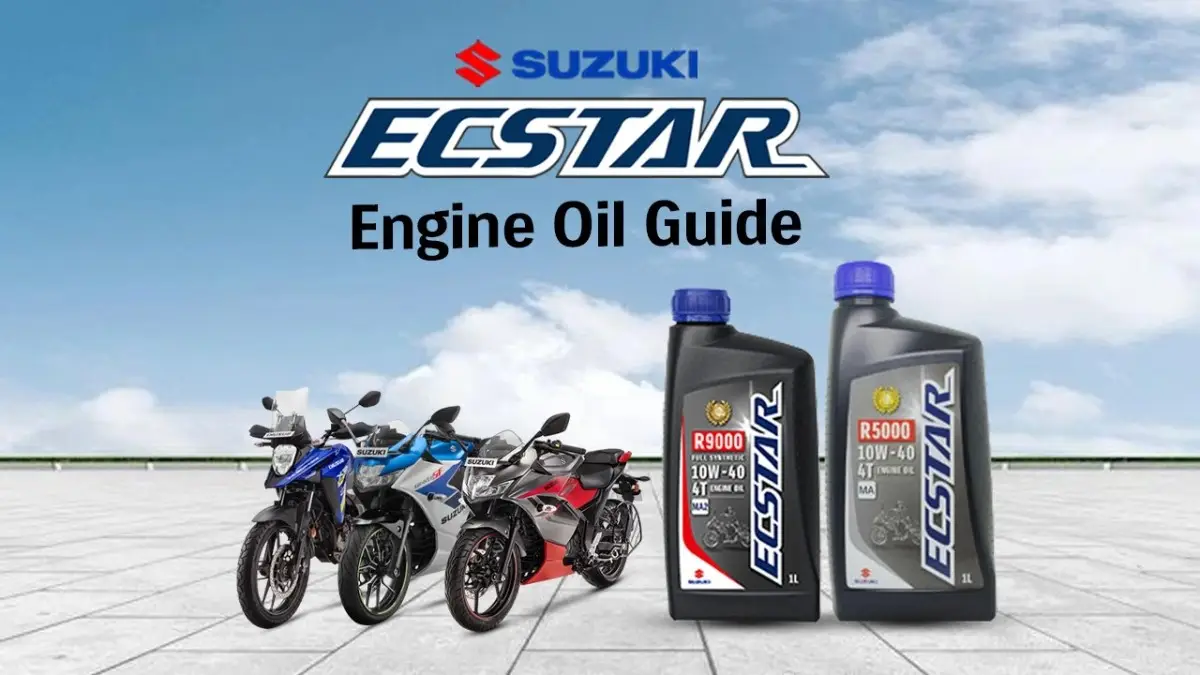
You’re standing at the service center counter, staring at three different bottles of Ecstar engine oil: R5000, R7000, and R9000. They all say 10W-40, they’re all made by Suzuki, but the price difference is ₹300 to ₹800. Which one does your Gixxer (Motorcycle) need? More importantly, does spending extra on premium oil make any real difference, or is it just marketing hype?
Today, we’re demystifying Suzuki’s Ecstar engine oil lineup completely. By the end of this guide, you’ll know exactly which grade your bike needs, why it matters, and how to make the smartest choice for Indian riding conditions.
What Makes Ecstar Engine Oil Special
Suzuki developed Ecstar lubricants in the 1980s in pursuit of ultimate performance, with the name representing a guiding “Star” toward “Ecstatic” performance. But beyond the marketing story, what actually sets Ecstar engine oil apart from generic alternatives?
Engineered Specifically for Suzuki Engines
Unlike other oils designed to work in millions of different engines, Ecstar is formulated based on data from Suzuki’s own testing and racing programs. The company knows exactly how their pistons, cam profiles, and clutch materials behave under stress.
This means Ecstar engine oil contains additive packages optimized for Suzuki’s specific metallurgy and operating temperatures. It’s like the difference between off-the-shelf reading glasses and prescription lenses, both help you see, but one is calibrated for your exact needs.
Wet Clutch Compatibility
Most Suzuki motorcycles use wet clutches that run in engine oil. Generic automotive oils contain friction modifiers that make clutches slip, a dangerous situation when you’re accelerating through traffic or climbing hills.
Every grade of Ecstar engine oil meets JASO MA or MA2 specifications, guaranteeing it won’t cause clutch slippage. This certification is critical for motorcycle applications and confirms the oil is safe for your bike’s integrated clutch system.
Quality Consistency
When you buy Ecstar at an authorized Suzuki service center, you’re guaranteed genuine oil with consistent quality. The counterfeit oil market in India is substantial, and fake products can cause engine damage. Purchasing Ecstar engine oil through official channels eliminates this risk.
Warranty Protection
Using recommended Ecstar grades helps maintain your warranty coverage. If an engine problem occurs and you’ve been using non-specified oil, Suzuki might question warranty claims. Genuine Ecstar engine oil, accompanied by proper documentation, protects your investment.
Understanding the Ecstar Engine Oil Range
Suzuki’s product lineup consists of grades for all users: F9000 is designed for high performance, while F7000 balances performance with cost. Let’s break down what each grade actually means for your motorcycle.
Ecstar R5000: Mineral Oil Foundation
R5000 is Suzuki’s mineral-based Ecstar engine oil. Mineral oils are refined directly from crude petroleum with minimal chemical modification.
Key characteristics:
- Base stock: Mineral (Group I or II base oils)
- Additive technology: Standard protection package
- Price point: Most affordable (₹350-₹450 per liter)
- Recommended change interval: 3,000-4,000 km
Best for:
- Older Suzuki models (pre-2010 bikes)
- Low-performance engines (110cc-150cc)
- Budget-conscious riders
- Bikes with high mileage (40,000+ km)
- Moderate riding conditions
R5000 provides adequate protection for basic commuter bikes in normal conditions. It’s the baseline Ecstar engine oil that meets all essential requirements without premium features.
Ecstar R7000: Semi-Synthetic Performance
R7000 represents Suzuki’s semi-synthetic or “blend” formulation, combining mineral base stocks with synthetic components.
Key characteristics:
- Base stock: Semi-synthetic blend (typically 30-50% synthetic)
- Additive technology: Enhanced protection and cleaning agents
- Price point: Mid-range (₹550-₹700 per liter)
- Recommended change interval: 4,000-5,000 km
Best for:
- Modern commuter bikes (Gixxer 155, Access 125)
- Mixed riding conditions (city and occasional highway)
- Moderate climate exposure
- Riders wanting better protection than mineral oil
- Standard performance expectations
R7000 offers the best balance of cost and protection for most Indian riders. This Ecstar engine oil grade handles daily commutes, weekend rides, and occasional touring without breaking your budget.
Ecstar R9000: Full Synthetic Excellence
R9000 is Suzuki’s premium fully synthetic Ecstar engine oil, engineered for maximum performance and protection.
Key characteristics:
- Base stock: 100% synthetic (Group IV/V base oils)
- Additive technology: Advanced friction modifiers and extreme pressure additives
- Price point: Premium (₹900-₹1,200 per liter)
- Recommended change interval: 5,000-6,000 km
Best for:
- High-performance bikes (Gixxer SF 250, Hayabusa)
- Aggressive riding styles and track use
- Extreme temperature conditions
- Long-distance touring
- Maximum engine protection priority
R9000 provides superior film strength, better high-temperature stability, and enhanced wear protection. If you push your bike hard or ride in demanding conditions, this Ecstar engine oil delivers measurable benefits.
Decoding Oil Viscosity Ratings
You’ll see numbers like 10W-40 or 20W-50 on Ecstar engine oil bottles. Understanding these ratings helps you choose the right oil for your climate and riding style.
The W Stands for Winter
The first number (10W, 15W, 20W) indicates cold-temperature viscosity, how easily the oil flows when your engine is cold.
Lower numbers mean:
- Thinner oil at low temperatures
- Easier cold starts
- Faster oil circulation on startup
- Better protection during the warm-up period
In India’s climate, 10W oils work perfectly. Even in North India’s coldest winters, 10W provides adequate cold-start protection. The 20W designation is only necessary in extreme cold climates like high-altitude mountain regions.
The Second Number Indicates Hot Viscosity
The number after the W (40, 50) represents the oil’s viscosity at 100°C operating temperature.
Higher numbers mean:
- Thicker oil at operating temperature
- Better protection for worn engines
- More suitable for high temperatures
- Slightly reduced fuel economy
Most Suzuki motorcycles specify 10W-40 for Indian conditions. Some older or air-cooled models recommend 20W-50 for extreme summer heat.
Common Ecstar Engine Oil Viscosity Grades
10W-30: Suitable for cooler climates, newer engines, fuel efficiency priority 10W-40: Standard recommendation for most Suzuki bikes in India 15W-50: Older bikes, high temperatures, engines with significant wear 20W-50: Very old bikes, extreme heat conditions, air-cooled engines
Your owner’s manual specifies the exact viscosity for your bike. Don’t deviate from this recommendation unless you have specific reasons and understand the implications.
Choosing the Right Ecstar Engine Oil Grade for Your Bike
Selecting the optimal Ecstar engine oil depends on multiple factors beyond just your bike model. Let’s create a decision framework.
Factor 1: Your Bike’s Age and Condition
New bikes (0-10,000 km): Use the exact Ecstar engine oil grade specified in your manual. During break-in and early life, follow manufacturer recommendations precisely. Most new Suzukis specify R7000 or R9000.
Mid-life bikes (10,000-40,000 km): You have flexibility here. If your bike specifies R9000 but you ride conservatively, R7000 works fine. If originally specified for R5000, but you want better protection, upgrading to R7000 is beneficial.
High-mileage bikes (40,000+ km): Older engines develop slightly more internal clearances due to wear. Consider using the same grade but moving up one viscosity level (10W-40 to 15W-50) if you notice oil consumption or pressure drop.
Factor 2: Riding Style and Intensity
Casual commuting (city riding, moderate speeds): R5000 or R7000 provides adequate protection. Save your money for other maintenance needs.
Spirited riding (frequent highway runs, aggressive acceleration): R7000 minimum, R9000 preferred. Higher engine speeds and loads demand better oil film strength.
Performance/track riding: Always use R9000. The superior high-temperature stability and film strength prevent bearing damage under extreme conditions.
Long-distance touring: R7000 or R9000 recommended. Extended high-speed operation generates sustained heat that premium Ecstar engine oil handles better.
Factor 3: Climate Conditions
Moderate temperatures (20-35°C year-round): Follow your manual’s specification exactly. Standard grades work perfectly.
Extreme heat (regular 40-45°C+ temperatures): Consider upgrading one grade (R5000→R7000 or R7000→R9000) or moving to heavier viscosity (10W-40→15W-50).
High altitude/cold regions: Stick with 10W viscosity oils for easier cold starts. R7000 or R9000 synthetic blends flow better in cold weather than mineral oils.
Monsoon-heavy areas: More frequent oil changes matter more than grade choice. Moisture contamination is the enemy; change oil every 3,000 km during the monsoon season.
Factor 4: Budget Considerations
Here’s the honest cost-benefit analysis:
R5000 (₹400/liter):
- Annual cost (4 changes): ₹1,600
- Adequate for basic needs
- Shortest change intervals required
R7000 (₹625/liter):
- Annual cost (3-4 changes): ₹1,875-₹2,500
- Best value proposition
- Extends change intervals slightly
- Better protection than mineral oil
R9000 (₹1,050/liter):
- Annual cost (3 changes): ₹3,150
- Maximum protection
- Longest change intervals
- Only necessary for performance bikes or demanding use
The difference between R5000 and R7000 annually is ₹300-₹900, easily justified by better protection and slightly extended service life. The jump to R9000 costs ₹650-₹1,550 extra annually, worthwhile only if you truly need its performance benefits.
Mineral vs Semi-Synthetic vs Fully Synthetic: What Actually Matters
The oil industry loves marketing around “synthetic superiority,” but let’s separate facts from hype regarding Ecstar engine oil types.
Mineral Oil (R5000): The Traditional Choice
Real advantages:
- Cost-effective for high-mileage or older engines
- Adequate protection for moderate use
- Better seal compatibility in very old bikes
- Proven track record over decades
Actual limitations:
- Breaks down faster at high temperatures
- Contains more impurities from the refining process
- Requires shorter change intervals
- Lower film strength under extreme pressure
Truth: Mineral Ecstar engine oil works perfectly fine for most commuter bikes in normal conditions. The notion that it’s “dangerous” or “inadequate” is false; it’s simply less advanced than synthetic alternatives.
Semi-Synthetic (R7000): The Practical Sweet Spot
Real advantages:
- Significantly better high-temperature stability than mineral
- Improved detergent properties keep engines cleaner
- Better cold-start protection
- Cost-effective performance enhancement
- Extended drain intervals compared to mineral
Actual limitations:
- Not quite as robust as a full synthetic in extreme conditions
- Still degrades faster than 100% synthetic
- The additive package is less advanced than the premium oils
Truth: R7000 represents the best bang-for-buck for 80% of Indian riders. It provides most of the benefits of synthetic technology at a reasonable cost.
Fully Synthetic (R9000): Premium Performance
Real advantages:
- Superior high-temperature and high-shear stability
- Exceptional cold-flow properties
- Advanced friction-reducing additives
- Longest useful life before degradation
- Best protection for high-performance engines
Actual limitations:
- Premium price doesn’t always translate to measurable benefits for mild-mannered riding
- It can be overkill for simple commuter engines
- May not provide proportional value in low-stress applications
Truth: R9000 Ecstar engine oil delivers genuine performance benefits, but only if your bike and riding style can actually utilize them. Using R9000 in a 110cc commuter bike ridden gently is like wearing racing boots to walk to the grocery store.
Indian Climate Considerations for Ecstar Engine Oil
India’s diverse climate zones demand thoughtful Ecstar engine oil selection. What works in Bangalore differs from what’s optimal in Jaipur or Guwahati.
North India: Temperature Extremes
Winter challenges (December-February):
- Morning temperatures: 5-15°C
- Engine oil thickness increases dramatically in cold weather
- Cold-start wear accounts for the majority of engine damage
Solution: Use 10W-40 viscosity Ecstar engine oil. R7000 or R9000 flows better than R5000 mineral oil in cold, providing faster lubrication circulation on startup.
Summer challenges (May-July):
- Daytime temperatures: 42-48°C
- Road surface temperatures exceed 60°C
- Traffic idling generates extreme engine heat
Solution: Consider 15W-50 viscosity if your bike allows it. If restricted to 10W-40, use R7000 or R9000 for better thermal stability.
South India: Consistent Heat and Humidity
Year-round conditions:
- Moderate to high temperatures (28-38°C)
- High humidity accelerates oil oxidation
- Coastal areas have salt-air exposure
Solution: Standard 10W-40 specification works well. R7000 provides excellent balance. Change oil every 4,000 km due to humidity-accelerated degradation.
Coastal Regions: Moisture and Salt
Unique challenges:
- Salt air causes accelerated corrosion
- High humidity contaminates oil with moisture
- Consistent moderate temperatures
Solution: Use R7000 or R9000 with excellent detergent packages. The advanced additives in these Ecstar engine oil grades combat moisture and provide better corrosion protection. Change oil frequently, every 3,500-4,000 km.
Hill Stations and Mountain Regions
Operating conditions:
- Sustained climbing generates high engine loads
- Cooler ambient temperatures most of the year
- Frequent altitude changes affect engine operation
Solution: R7000 or R9000 recommended. Sustained hill climbing stresses oil film strength, premium Ecstar engine oil prevents bearing damage under prolonged load.
Dusty Central India
Challenging conditions:
- Fine dust infiltrates everything
- Agricultural activity creates heavy dust loads
- Dry heat accelerates oil thickening
Solution: Focus less on oil grade, more on frequent changes. Even the premium R9000 becomes contaminated quickly in dust. Use R5000 or R7000 and change every 3,000 km rather than using R9000 for 5,000 km.
Ecstar Engine Oil Recommendations by Suzuki Model
Let’s get specific about which Ecstar engine oil grade works best for popular Suzuki motorcycles in India.
Access 125 / Burgman Street
Official recommendation: 10W-30 (R5000 or R7000)
Real-world advice: R5000 is perfectly adequate for this 125cc scooter if you ride gently in city conditions. Upgrade to R7000 if you:
- Frequently ride in heavy traffic (extended idling)
- Carry pillion passengers regularly
- Take occasional highway trips
- Live in extreme temperature regions
R9000 is overkill for this application unless you simply want the absolute best regardless of cost.
Gixxer 155 / Gixxer SF 155
Official recommendation: 10W-40 (R7000 recommended)
Real-world advice: This 155cc engine benefits meaningfully from R7000 semi-synthetic Ecstar engine oil. It runs at higher RPM than scooters and generates more heat. R5000 works but requires 3,000 km change intervals.
Upgrade to R9000 if you:
- Ride aggressively with frequent high-RPM operation
- Take long highway rides regularly
- Live in very hot climates
- Want maximum protection for long-term ownership
Gixxer 250 / Gixxer SF 250
Official recommendation: 10W-40 (R7000 or R9000)
Real-world advice: This performance-oriented 250cc engine deserves R7000 minimum, R9000 preferred. The higher specific output generates more heat and mechanical stress.
Use R9000 Ecstar engine oil if you:
- Ride spiritedly (frequent 8,000+ RPM operation)
- Take the bike to track days
- Tour extensively
- Value maximum engine longevity
R7000 suffices for moderate street riding, but R9000 provides measurable protection benefits in this application.
V-Strom / Adventure Bikes
Official recommendation: 10W-40 (R9000 recommended)
Real-world advice: Adventure bikes see diverse operating conditions, extended highway runs, slow technical riding, heavy loads, and sustained climbing. R9000 fully synthetic Ecstar engine oil provides the broad operating window these conditions demand.
R7000 works if you use the bike primarily for commuting and light touring, but adventure bikes are engineered to expect premium oil. Don’t compromise here.
Hayabusa / GSX-R Series
Official recommendation: 10W-40 (R9000 mandatory)
Real-world advice: High-performance sportbikes have tight bearing clearances and operate at extreme speeds and loads. Only R9000 provides adequate protection. Using lesser grades risks bearing damage and shortened engine life.
These bikes cost ₹10-25 lakhs. Don’t save ₹400 per oil change by using inadequate oil.
Common Mistakes When Using Ecstar Engine Oil
Even riders who choose the correct Ecstar engine oil grade sometimes make errors that undermine its effectiveness.
Mistake 1: Mixing Different Grades
Never mix R5000, R7000, and R9000 in the same engine. Each has different base stocks and additive packages that may not be compatible.
If you’re switching grades, completely drain the old oil first. Small amounts of residual oil mixing won’t cause problems, but intentionally topping up R5000 with R9000 creates an unknown mixture with unpredictable properties.
Mistake 2: Extending Change Intervals Excessively
Engine oil degrades over time, even if the vehicle is not driven for a long time. R9000’s extended change capability doesn’t mean you can go 8,000 km or 12 months between changes.
Follow these maximum intervals for Ecstar engine oil:
- R5000: 3,000 km or 4 months
- R7000: 4,000 km or 6 months
- R9000: 5,000 km or 6 months
Whichever limit comes first dictates when you change oil. Even premium R9000 degrades from oxidation and moisture if left in the engine for a year.
Mistake 3: Using the Wrong Viscosity
Your manual specifies 10W-40, but you buy 20W-50 because “thicker is better.” This causes:
- Increased cold-start wear (oil circulates more slowly)
- Reduced fuel economy
- Potential oil pump strain
- Incorrect bearing clearances
Only use viscosity grades specified in your manual unless you have expert advice for specific situations (extreme temperatures, very high mileage).
Mistake 4: Buying from Unauthorized Sellers
Counterfeit Ecstar engine oil is prevalent in India. Bottles look genuine but contain substandard oil that damages engines.
Only purchase from:
- Authorized Suzuki service centers
- Verified Suzuki spare parts dealers
- Reputable online retailers (with proper invoices)
The ₹50-₹100 you might save buying from a roadside shop isn’t worth the risk of engine damage.
Mistake 5: Ignoring Oil Level Between Changes
Check your oil level weekly using the sight glass or dipstick. Engines naturally consume small amounts of oil, and levels drop over time.
If oil drops below the minimum mark, top up with the same grade of Ecstar engine oil you’re using. Running an engine low on oil causes accelerated wear and potential catastrophic damage; even the best oil can’t protect if there’s not enough of it.
Mistake 6: Overlooking Oil Filter Changes
Always replace your oil filter when changing Ecstar engine oil. A clogged filter forces oil through the bypass valve, meaning unfiltered oil circulates through your engine.
Suzuki genuine oil filters are engineered to match Ecstar oil specifications. Aftermarket filters may have different flow rates or filtration efficiencies that affect oil performance.
Reading Your Oil: What Condition Tells You
Used Ecstar engine oil condition reveals valuable information about your engine’s health and whether you’re using the right grade.
Normal Used Oil Appearance
After 3,000-5,000 km, your oil should be dark brown or black (this is normal, it indicates the oil is suspending contaminants as designed). It should still feel slippery between your fingers and shouldn’t smell burnt.
Warning Signs in Used Oil
Milky or foamy appearance: Indicates coolant contamination (head gasket leak) or excessive moisture. Address immediately, this damages bearings rapidly.
Burnt smell: Suggests the oil exceeded its thermal limits. You may be using too low a grade for your riding style or extending changes too long.
Metallic particles: Small amounts are normal, but excessive metal visible to the eye indicates abnormal wear. Have your engine inspected.
Very thick consistency: Oil should flow easily when drained. If it’s thick like syrup, you’ve extended the change interval too far or used the wrong viscosity.
Gritty feel: Indicates dirt/dust infiltration. Check your air filter and ensure proper sealing. Consider shortening change intervals.
The Ecstar Engine Oil Investment: Is Premium Worth It?
Let’s do honest math on whether upgrading from R5000 to R7000 or R9000 delivers return on investment.
Scenario 1: Commuter Bike (Access 125)
Current situation: Using R5000, changing every 3,000 km
- Annual mileage: 12,000 km
- Oil changes per year: 4
- Oil cost per change: ₹400
- Annual oil expense: ₹1,600
Upgrade option: Switch to R7000, extending to 4,000 km intervals
- Oil changes per year: 3
- Oil cost per change: ₹625
- Annual oil expense: ₹1,875
- Additional cost: ₹275
Value analysis: You pay ₹275 extra for better protection, a cleaner engine, and one fewer service visit. Worth it? For most riders, yes, the convenience and improved protection justify ₹23/month.
Scenario 2: Performance Bike (Gixxer 250)
Current situation: Using R7000, changing every 4,000 km
- Annual mileage: 15,000 km
- Oil changes per year: 3-4
- Oil cost per change: ₹625
- Annual oil expense: ₹2,500
Upgrade option: Switch to R9000
- Oil changes per year: 3
- Oil cost per change: ₹1,050
- Annual oil expense: ₹3,150
- Additional cost: ₹650
Value analysis: You pay ₹650 extra (₹54/month) for maximum protection. For a ₹1.5-2 lakh bike that you ride enthusiastically, this is smart insurance. The better protection potentially adds 20,000+ km of engine life.
Long-Term ROI
Better Ecstar engine oil reduces wear, which translates to:
- Fewer major repairs (₹15,000-₹30,000 savings)
- Better resale value (₹5,000-₹10,000 premium)
- Reduced downtime and inconvenience (priceless)
Over 50,000 km of ownership, spending an extra ₹3,000-₹5,000 on premium oil can save you ₹20,000+ in avoided repairs and improved resale value.
Storage and Handling of Ecstar Engine Oil
Proper storage ensures your Ecstar engine oil maintains its properties until use.
Before Opening
Store sealed bottles in a cool, dry location away from direct sunlight. Temperature extremes (especially heat) can degrade oil even in sealed containers.
The shelf life of unopened Ecstar engine oil is typically 3-5 years when properly stored. Check the manufacturing date on bottles and use the oldest stock first.
After Opening
Once opened, oil begins to oxidize from air exposure. Use opened bottles within 6-12 months.
Keep the cap tightly sealed when not in use. Store upright to prevent leaks. Label partially used bottles clearly so you don’t forget which grade they contain.
Don’t Store Used Oil Improperly
Used oil is hazardous waste. Never dump it down drains or on the ground. Most service centers accept used oil for proper disposal. Store it in sealed containers until you can dispose of it responsibly.
Conclusion: Making Your Ecstar Engine Oil Decision
Choosing the right Ecstar engine oil doesn’t require an engineering degree; it requires understanding your bike, your riding style, and your priorities.
For most Indian riders on commuter bikes, R7000 represents the sweet spot: significantly better than mineral oil without the premium cost of full synthetic. It handles our climate, traffic conditions, and diverse riding scenarios excellently.
If you ride a performance bike, tour extensively, or push your motorcycle hard, R9000 provides measurable protection benefits that justify its premium price. The ₹400-₹500 extra per change is cheap insurance for a machine you depend on.
And if you’re on a tight budget with a basic commuter and gentle riding style, R5000 works perfectly fine with appropriate change intervals. Don’t let anyone shame you for using mineral oil; it’s been protecting engines successfully for decades.
Recommended Resources:
- Global Suzuki Ecstar Information – Technical details about Ecstar development and specifications
