


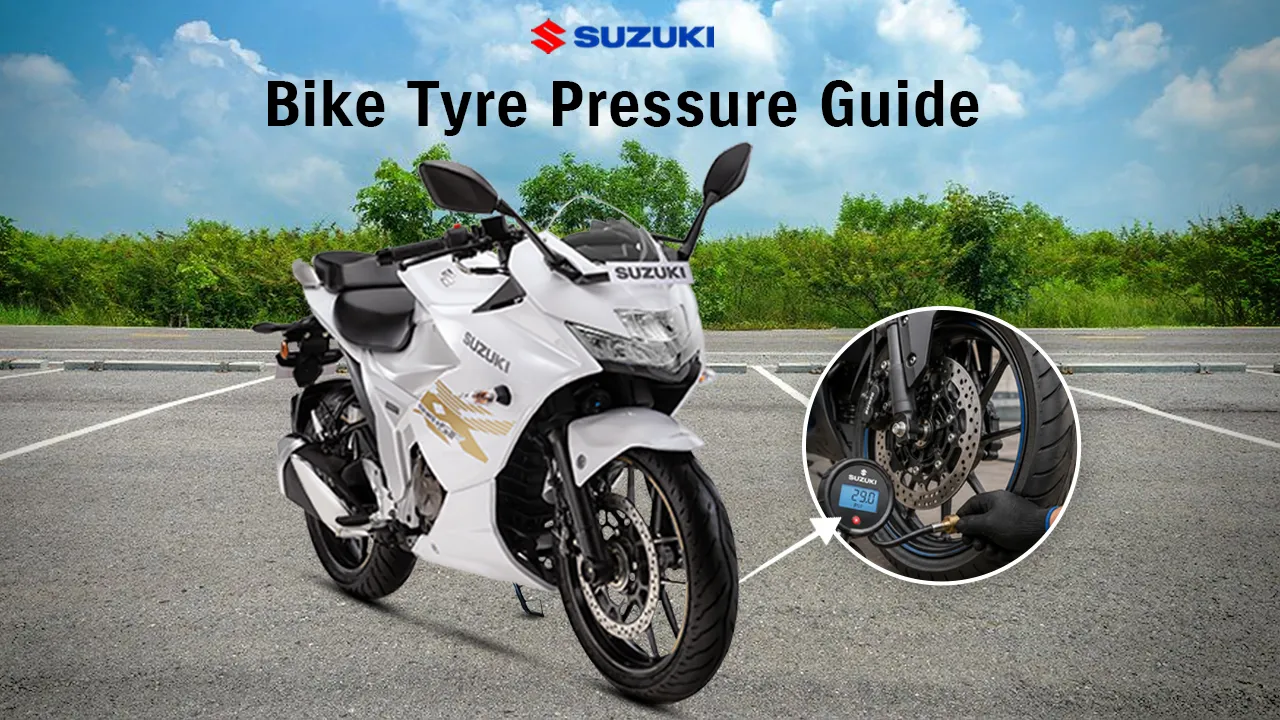
Maintaining the correct tyre pressure is one of the most important yet often overlooked aspects of two-wheeler maintenance. Properly inflated tyres help ensure stable handling, smoother rides, and consistent performance in everyday riding conditions. Regular tyre pressure checks also support efficient vehicle operation and help maintain overall riding comfort.
For any motorcycle or scooter, keeping tyres at the recommended PSI ensures that the vehicle performs as intended and delivers a balanced riding experience.
Why Correct Tyre Pressure Matters?
Tyres are the only contact point between a two-wheeler and the road. Maintaining the recommended tyre pressure allows them to function effectively and deliver predictable performance.
Correct tyre pressure contributes to:
- Stable handling and improved road grip
- Smooth and comfortable riding experience
- Consistent vehicle performance
Regular inspection ensures that tyres remain properly inflated and ready for daily riding conditions.
Recommended Tyre Pressure for Suzuki Two-Wheelers
Tyre pressure requirements vary depending on the vehicle model and riding conditions. The recommended PSI may also change depending on whether the rider is travelling alone or with a pillion.
Suzuki Scooters (Internal Combustion Engine)
| Model | Solo Riding (Front) | Solo Riding (Rear) | Dual Riding (Front) | Dual Riding (Rear) |
| ACCESS | 22 PSI | 29 PSI | 22 PSI | 36 PSI |
| AVENIS | 25 PSI | 29 PSI | 25 PSI | 36 PSI |
| BURGMAN STREET | 25 PSI | 29 PSI | 25 PSI | 36 PSI |
| BURGMAN STREET EX | 29 PSI | 33 PSI | 29 PSI | 36 PSI |
Suzuki e-ACCESS
| Model | Solo Riding (Front) | Solo Riding (Rear) | Dual Riding (Front) | Dual Riding (Rear) |
| e-Access (OK/NG) | 25 PSI | 33 PSI | 25 PSI | 36 PSI |
Suzuki Motorcycles
| Model | Solo Riding (Front) | Solo Riding (Rear) | Dual Riding (Front) | Dual Riding (Rear) |
| GIXXER 150 | 29 PSI | 33 PSI | 29 PSI | 33 PSI |
| GIXXER 250 | 29 PSI | 33 PSI | 29 PSI | 33 PSI |
| V-STROM 250 | 22 PSI | 29 PSI | 22 PSI | 29 PSI |
Suzuki Big Bikes
| Model | Solo Riding (Front) | Solo Riding (Rear) | Dual Riding (Front) | Dual Riding (Rear) |
| Hayabusa | 42 PSI | 42 PSI | 42 PSI | 42 PSI |
| V-STROM 800 DE | 33 PSI | 36 PSI | 33 PSI | 41 PSI |
| GSX-8R | 36 PSI | 26 PSI | 36 PSI | 36 PSI |
These values help ensure that the vehicle maintains proper balance and handling characteristics during different riding conditions.
When Should You Check Tyre Pressure?
Checking tyre pressure regularly should be part of routine vehicle care. Periodic inspections help ensure tyres remain within the recommended range and continue to perform optimally. Incorporating tyre checks into simple pre-ride inspections can help riders maintain consistent riding performance and safety.
Simple Tips to Maintain Proper Tyre Pressure
A few practical habits can help keep tyres in the ideal condition:
- Check tyre pressure regularly
- Follow the recommended PSI for your specific model
- Consider riding conditions, such as solo or pillion riding
- Include tyre inspections during routine servicing
These simple practices can contribute to improved riding comfort and vehicle performance over time.
Supporting Consistent Riding Performance
Correct tyre pressure plays a key role in maintaining the overall balance and stability of a motorcycle or scooter. By keeping tyres inflated at the recommended PSI levels, riders can enjoy smoother rides, predictable handling, and dependable everyday performance.
Routine checks and proper maintenance help ensure that your two-wheeler continues to deliver the reliable riding experience it was designed for.
