


Engine oil is one of the most critical factors influencing a motorcycle’s performance, responsiveness, and longevity. Far beyond basic lubrication, it plays a pivotal role in controlling heat, minimizing wear, enabling smooth gear shifts, and ensuring long‑term engine reliability.
In India’s diverse riding conditions, which are marked by stop‑and‑go traffic, uneven road surfaces, and fluctuating weather, selecting the right engine oil is not just a technical choice but an essential aspect of responsible motorcycle ownership.
This guide highlights the best engine oils for bikes, key factors to consider, and practical do’s and don’ts to help riders enjoy smoother journeys while safeguarding their engine’s health for years to come.
Why Engine Oil Is Especially Important for Motorcycles
Most motorcycles rely on a shared lubrication system, where the same oil simultaneously lubricates the engine, gearbox, and clutch. Unlike cars, which often have separate fluids for these components, motorcycle oil must perform multiple demanding tasks at once.
This design places the oil under higher mechanical and thermal stress because it must:
- Protect the engine from friction and heat buildup.
- Lubricate the gearbox to ensure smooth shifting under heavy loads.
- Manage clutch performance, preventing slippage while still allowing controlled engagement.
As a result, motorcycle engine oil needs to be more robust in terms of viscosity stability, thermal resistance, and additive formulation compared to oils used in many other vehicles. Choosing the right oil directly impacts performance, durability, and riding comfort.
A suitable engine oil helps to:
- Reduce friction between moving components, preventing wear and extending engine life.
- Dissipate excess heat generated during riding, keeping the engine temperature stable.
- Keep internal parts clean by suspending dirt, deposits, and combustion byproducts, ensuring smooth operation.
- Support clutch and gearbox by enabling smooth clutch engagement and seamless gear transitions.
Understanding Engine Oil Viscosity
Viscosity refers to how easily oil flows at different temperatures and is represented by grades such as 10W-30, 10W-40, or 20W-50.
- The first number indicates cold-start flow characteristics
- The second number represents oil thickness at normal operating temperatures
Choosing the recommended viscosity helps maintain consistent lubrication during cold starts, city traffic, and extended riding periods.
Types of Best Engine Oil for Bikes
Motorcycle engine oils are generally categorized based on formulation:
| Mineral Oil | Semi-Synthetic Oil | Fully Synthetic Oil |
| Derived directly from crude oil | Blend of mineral + synthetic | 100% chemically engineered |
| Pros: Affordable, widely available | Pros: Balanced cost & performance | Pros: Superior lubrication, heat resistance |
| Cons: Breaks down faster, less protection | Cons: Slightly costlier | Cons: Expensive, may be overkill for low-cc bikes |
| Best for commuter bikes with low mileage | Best for mid-range bikes (150–220cc) | Best for high-performance bikes (250cc+) |
Engine Oil Do’s and Don’ts for Smooth and Reliable Riding
Choosing and maintaining the right engine oil involves a few essential best practices, as well as common mistakes to avoid. Keeping these in mind helps ensure consistent engine performance and long-term reliability.
What to Do
- Follow the manufacturer’s recommendations in the owner’s manual for oil grade, viscosity, and service intervals, as these are based on engine design and testing.
- Change engine oil at recommended intervals, as oil gradually degrades due to heat, contaminants, and mechanical stress.
- Regularly check oil level and condition to ensure it remains within specified limits and remains clean.
- Use motorcycle-specific engine oils designed for wet clutches and gearboxes, supporting smooth power delivery and gear shifts.
What to Avoid
- Avoid using automotive engine oil, as it may contain additives unsuitable for motorcycle clutches.
- Do not mix different oil grades or formulations, which can compromise lubrication effectiveness.
- Do not delay oil changes, even if the motorcycle is used infrequently, as oil can degrade over time.
- Avoid overfilling the engine, which can lead to foaming, pressure build-up, and reduced lubrication efficiency.
How the Right Engine Oil Supports Long-Term Engine Health
Using the correct engine oil consistently plays a foundational role in preserving engine health. Motorcycle engines operate under high temperatures and mechanical loads, especially in everyday Indian riding conditions that include frequent traffic stops, uneven roads, and extended idling. The right engine oil helps manage these stresses effectively.
Proper lubrication creates a protective oil film between moving components, reducing direct metal-to-metal contact. This helps maintain stable performance and consistent power delivery over time.
Reduced friction also allows the engine to run more smoothly and quietly, improving overall riding comfort.
Engine oil contributes to smoother throttle response by enabling internal components to move freely. When lubrication is optimal, the engine responds more precisely to rider input, enhancing control in both city and highway conditions.
Additionally, reduced internal friction helps the engine operate more efficiently, supporting better fuel efficiency under regular riding conditions. Over the long term, maintaining clean and effective lubrication helps minimize wear on critical components, resulting in lower maintenance requirements and reduced likelihood of premature repairs.
Together, these benefits result in a motorcycle that feels refined, reliable, and comfortable to ride.
Suzuki Genuine Engine Oils: Options Available for Suzuki Motorcycles
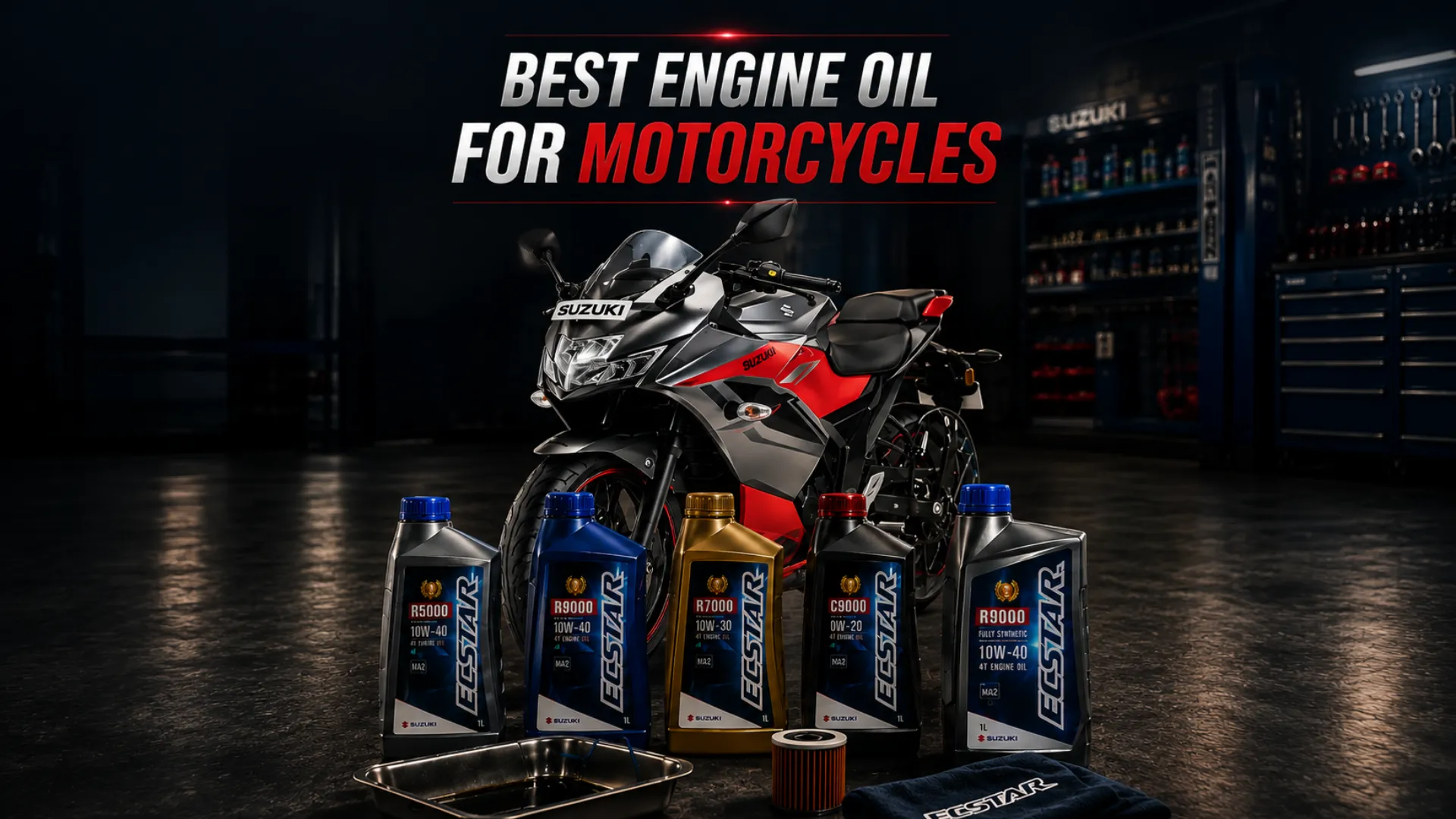
To support proper engine care, Suzuki offers a range of genuine Suzuki ECSTAR oil products specially developed for Suzuki motorcycles under its official ECSTAR brand. These engine oils are developed to align with Suzuki’s engine designs, lubrication requirements, and recommended service practices, ensuring compatibility across a wide range of Suzuki motorcycles and scooters.
The ECSTAR lineup available on Suzuki Motorcycle India’s official website includes options across mineral, semi-synthetic, and fully synthetic formulations to suit different riding needs..
The best engine oil for bikes from the current range includes:
- ECSTAR Mineral Engine Oil 10W-30 MA (R5000)
- ECSTAR Semi-Synthetic Engine Oil 10W-40 MA (R7000)
- ECSTAR Full Synthetic Engine Oil 10W-40 (R9000)
These options provide manufacturer-approved choices across different viscosity grades and oil types, helping riders select the most suitable engine oil that matches the operating requirements of their motorcycle.
Using genuine engine oils that meet Suzuki’s specifications supports correct lubrication Behaviour, smooth clutch and gearbox operation, and alignment with recommended service intervals.
When combined with regular servicing at authorized centres, this approach further ensures consistent performance and reliability.
Conclusion
Choosing the right engine oil is a fundamental aspect of motorcycle maintenance. By understanding viscosity grades, oil types, and proper maintenance practices and by avoiding common mistakes, riders can protect their engine, maintain smooth performance, and support long-term reliability.
A well-maintained engine delivers confidence, consistency, and comfort on every ride.
