


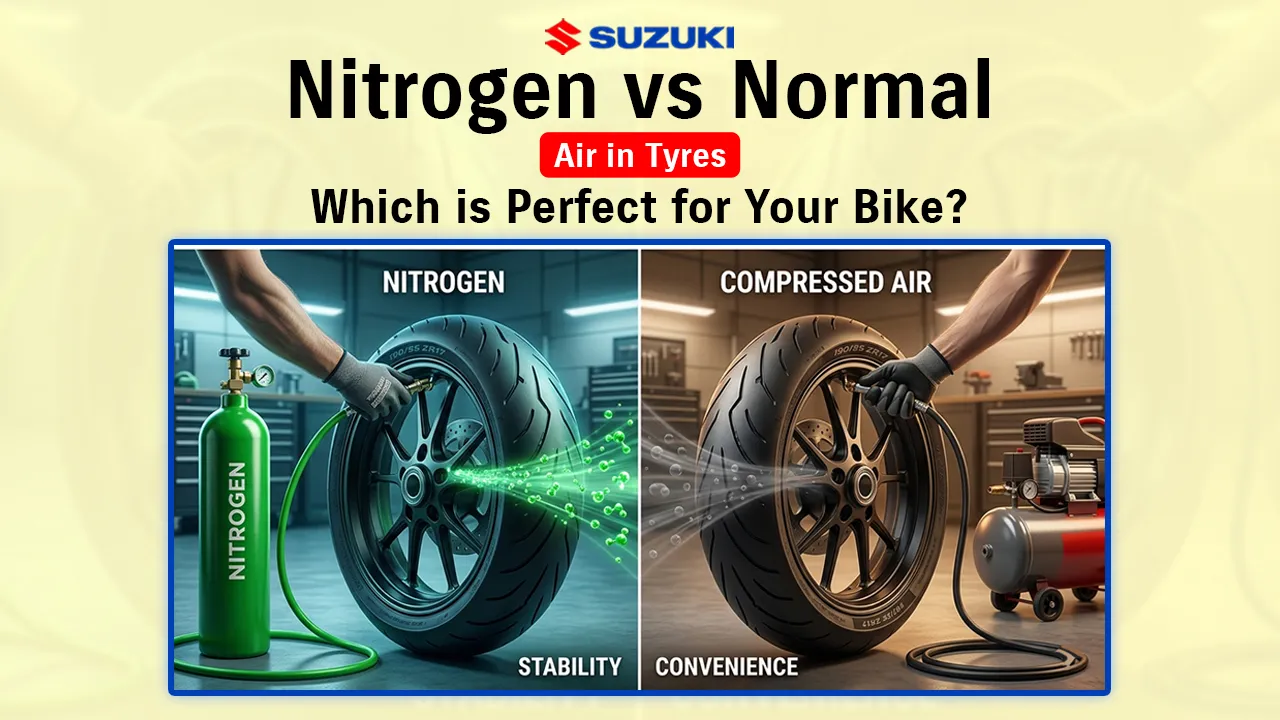
Tyre pressure plays a crucial role in how a motorcycle performs on the road. From stability and comfort to safety and tyre life, the type of air used in tyres can influence overall riding experience. One question riders often ask is: Nitrogen or normal air, which is better? Understanding the differences between the two can help you make a more informed decision based on your riding needs.
What is Normal Air in Tyres?
Normal air is the standard air commonly used at the fuel stations. It primarily contains:
- Nitrogen (~78%)
- Oxygen (~21%)
- Small amounts of moisture & other gases (~1%)
Since it contains oxygen and moisture, it can lead to gradual pressure changes over time.
What is Nitrogen Air in Tyres?
Nitrogen filled tyres use high-purity, dry nitrogen gas instead of regular compressed air, which means:
- Less moisture inside the tyre
- More stable pressure under temperature changes
That’s why nitrogen is often preferred where pressure consistency matters (long-distance travelling).
Pros and Cons of Normal Air
Advantages
- Easily accessible
- Convenient for regular top-ups
Limitations
- Pressure may fluctuate more frequently
- Contains moisture
Nitrogen vs Normal Air in Tyres: Key Differences
1. Pressure Retention
- Nitrogen: Maintains pressure for a longer duration
- Normal Air: Pressure may drop faster
2. Temperature Stability
- Nitrogen: Less affected by temperature fluctuations
- Normal Air: Expands and contracts more with temperature changes
3. Availability & Convenience
- Nitrogen: Available at select fuel stations
- Normal Air: Easily available everywhere
Which One Should You Choose?
On Indian roads, riding conditions can vary from congested city traffic to long highway stretches. Frequent braking, varying speeds, and temperature changes can influence tyre pressure. In such scenarios, maintaining the right tyre pressure becomes more important than the type of air used.
The choice between nitrogen and normal air depends on your usage:
- For daily commuting, normal air is practical and convenient.
- For longer rides & fewer pressure top‑ups, nitrogen can help.
Regular tyre pressure checks remain important regardless of the type of air used.
Conclusion
The debate between nitrogen and normal air in tyres comes down to usage, convenience, and maintenance preferences. While nitrogen offers better pressure stability, hence longevity of tyres, normal air remains a convenient and widely accessible option. Correct tyre pressure is what truly matters
