


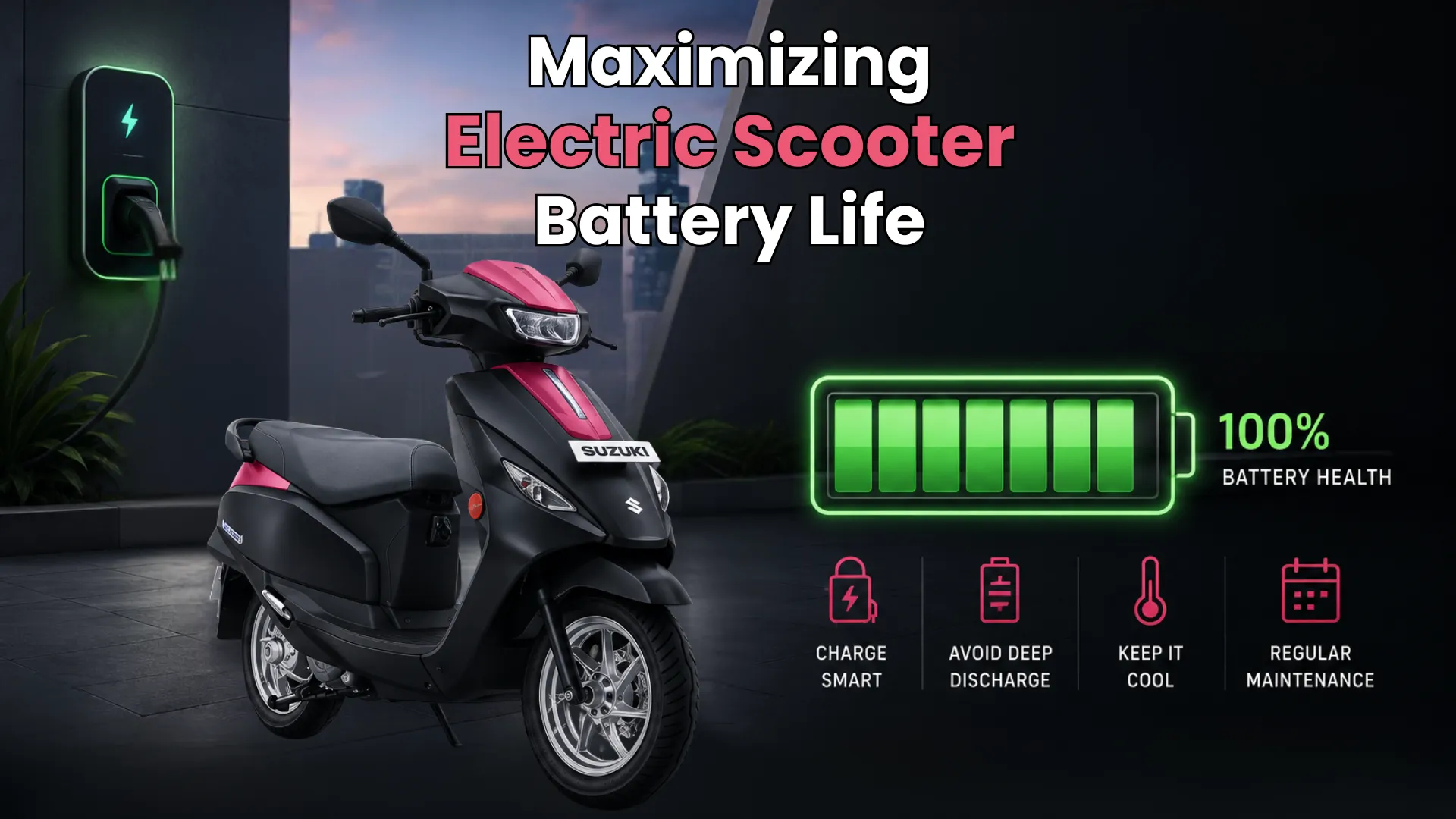
Electric scooters are steadily becoming a preferred choice for everyday commuting, offering a cleaner, quieter, and more convenient mobility experience. At the core of every electric scooter is its battery – a component that directly influences range, performance, convenience, and long-term ownership satisfaction.
Like any advanced technology, an electric scooter battery performs best when supported by the right care habits. Understanding how charging, riding conditions, storage, and maintenance affect battery health can help riders enjoy more dependable performance over time.
If you are wondering how to maximise electric scooter battery life, here are some practical and effective practices every rider should know.
Understanding Electric Scooter Battery Technology
Lithium-Ion Battery Chemistry
Most electric scooters use lithium-ion batteries, known for their efficiency, durability, and reliable performance. Like all rechargeable batteries, they naturally experience gradual ageing over time.
However, how you charge, ride, and maintain your scooter can significantly influence how well the battery performs in the long run. Think of battery care as part of regular scooter ownership, small efforts today can help support better performance tomorrow.
Smart Charging Habits That Can Help Battery Life
Charging practices play an important role in maintaining battery performance. A thoughtful charging routine can help support battery health over time.
1. Charge Regularly
Avoid making a habit of letting the battery drain completely before charging.
Instead:
- Charge your scooter based on your riding needs.
- Avoid repeatedly running the battery to extremely low levels.
- Maintain a regular charging routine whenever possible.
Consistent charging habits can help reduce unnecessary stress on the battery.
2. Avoid Frequent Deep Discharge
Occasionally running low on battery during longer rides is normal. However, repeatedly draining the battery completely may affect battery performance over time.
Charging before the battery becomes extremely low is generally a better practice for long-term battery care.
3. Avoid Unnecessary Prolonged Plug-In Time
Once charging is complete, unplugging the charger is a good ownership practice. Modern battery systems are designed to manage charging efficiently, but avoiding unnecessary prolonged plug-in periods can help maintain optimal charging conditions.
4. Use the Charger Provided or Recommended by the Manufacturer
Always use the charger provided or approved by the manufacturer.
Using compatible charging equipment helps:
- Support safe charging.
- Ensure proper electrical compatibility.
- Maintain reliable charging performance.
The Impact of Temperature on Battery Life
Temperature plays an important role in battery efficiency and long-term performance.
Lithium-ion batteries typically perform best in moderate temperature conditions. Prolonged exposure to excessive heat may accelerate battery ageing, while colder conditions can temporarily affect riding range and charging efficiency.
1. Smart Parking Habits
Whenever possible, park your electric scooter in shaded or covered areas, especially during extremely hot weather. Reducing prolonged exposure to direct sunlight can help minimise unnecessary thermal stress on the battery.
2. Charge in Suitable Conditions
Charging the scooter in a well-ventilated space with moderate temperatures can support efficient charging performance and help prevent excessive heat build-up.
Proper Storage Practices That Protect Battery Life
If your electric scooter is not going to be used for an extended period, proper storage practices become especially important.
1. Store With Partial Charge
Before long periods of inactivity, avoid storing the scooter with a completely drained battery. Instead, keep some charge in the battery before storage to help maintain battery stability during storage and support long-term performance.
2. Check the Battery Periodically
During prolonged storage, periodic battery checks are recommended to ensure charge levels do not fall excessively. Allowing the battery to remain discharged for an extended duration may affect battery performance over time.
3. Choosing the Right Storage Space
A cool and dry environment is ideal for storing an electric scooter. Protecting the scooter from excessive heat, humidity, or moisture can help maintain battery and electrical system health.
The Importance of Regular Maintenance
Battery performance is supported not only by charging habits but also by the overall condition of the scooter’s electrical systems.
Routine maintenance helps ensure electrical connections, charging systems, and battery management functions continue operating as intended.
Periodic servicing at Authorised Suzuki Service Centres can help identify potential issues early and support smoother long-term performance.
Keeping Charging Areas Clean
Keeping the charging port area clean and protected supports smooth charging performance.
Riders should:
- Avoid excessive dust and moisture around charging areas
- Avoid direct high-pressure water around electrical parts
- Rely on authorised service support for battery-related inspection
Riding Habits That Can Support Battery Efficiency
Daily riding habits may also influence how efficiently battery power is used.
1. Smooth and Controlled Riding
Gradual acceleration and steady riding patterns can help optimise energy usage. Smooth riding habits may contribute to better efficiency and more predictable battery performance over time.
2. Plan Rides Thoughtfully
Planning routes and charging schedules can help avoid unnecessary battery stress caused by frequent low-charge situations, especially during longer commutes.
Understanding Battery Ageing
It is important to understand that all batteries gradually age as part of normal use. Over time, battery capacity may naturally reduce, which is expected with lithium-ion technology.
However, responsible charging, proper storage, and regular maintenance can help ensure battery performance remains dependable for longer. If riders notice unusual heating, inconsistent charging behaviour, or unexpected warning indicators, it is advisable to consult an authorised service centre for professional inspection.
Why Battery Care Matters
Battery health directly affects convenience, daily usability, and overall ownership satisfaction. A well-maintained battery supports dependable commuting and helps riders get the most from their electric scooter experience.
Suzuki Motorcycle designs its electric scooters with reliability, durability, and everyday practicality in mind. Complementing this with informed battery care practices can help riders enjoy dependable long-term performance.
Conclusion
Maximising electric scooter battery life does not require complex measures. Small, consistent ownership habits can make a meaningful difference over time. Responsible charging, proper storage, temperature awareness, mindful riding, and periodic servicing together help support dependable battery performance and a smoother ownership experience.
With the right care, riders can enjoy greater confidence in their electric mobility journey while making the most of their scooter’s long-term performance.
