


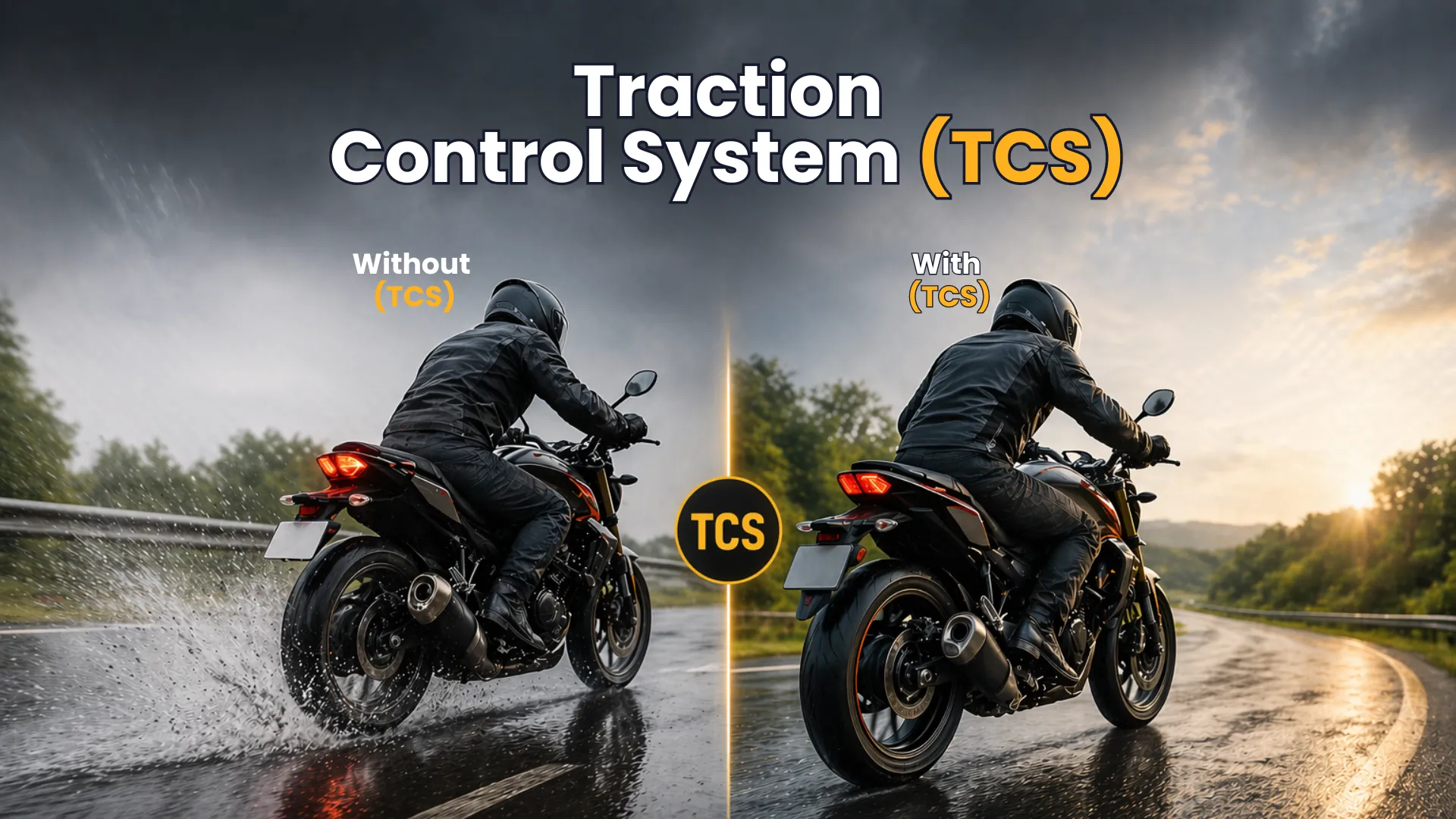
As vehicles become more advanced, safety technologies are playing an increasingly important role in enhancing rider and driver confidence. Among these innovations, the Traction Control System (TCS) stands out as a critical feature designed to improve stability and prevent loss of control during acceleration.
Whether you are navigating busy city streets, riding in the rain, or dealing with unpredictable road conditions, traction control can make a noticeable difference in how safely and smoothly a vehicle performs. In this blog, we’ll explore what a traction control system is, how it works, its benefits, limitations, and why it has become an essential feature in modern mobility.
What is a Traction Control System (TCS)?
A Traction Control System (TCS) is an electronic safety feature that helps prevent wheel slip during acceleration. It ensures that the driving wheels maintain optimal grip on the road surface, especially when traction is reduced.
In simple terms, traction control prevents the wheels from spinning uncontrollably when you accelerate. This is particularly important in conditions where the road surface does not provide sufficient grip.
Understanding Wheel Slip
To understand traction control better, it’s important to first understand what wheel slip is.
Wheel slip occurs when:
- The driving wheel rotates faster than the actual speed of the vehicle.
- There is insufficient friction between the tyre and the road surface.
Common Causes of Wheel Slip:
- Wet or rainy roads
- Loose gravel or sand
- Muddy or uneven terrain
- Sudden or aggressive acceleration
- Worn-out tyres
When wheel slip happens, it can lead to:
- Loss of stability
- Reduced control
- Increased risk of skidding or accidents
This is where traction control steps in.
How Does a Traction Control System Work?
Traction control systems use a combination of sensors and electronic controls to monitor and manage wheel behaviour in real time.
1. Wheel Speed Monitoring
Sensors placed on the wheels continuously measure their rotational speed.
2. Data Comparison
The system compares the speed of the driving wheel with other wheels or expected vehicle behaviour.
3. Slip Detection
If the system detects that a wheel is spinning faster than it should, it identifies a loss of traction.
4. System Intervention
To restore grip, the system automatically reduces power by:
- Adjusting fuel injection
- Retarding ignition timing
- Limiting throttle input
This happens almost instantly, often without the rider or driver noticing any interruption.
Why is Traction Control Important?
Traction control plays a crucial role in improving overall safety and vehicle stability.
1. Prevents Wheel Spin
TCS ensures that wheels do not spin excessively during acceleration, maintaining better road contact.
2. Enhances Stability
By controlling power delivery, the system helps maintain balance and stability in challenging conditions.
3. Improves Safety
It reduces the chances of skidding, especially on slippery or uneven surfaces.
4. Boosts Rider Confidence
Riders and drivers feel more confident knowing that the system is actively helping maintain control.
5. Provides Smoother Acceleration
TCS ensures controlled and gradual power delivery, improving the overall riding experience.
When Does Traction Control Activate?
Traction control is most effective in situations where traction is compromised.
Common Scenarios:
- Riding or driving on wet roads.
- Accelerating on gravel or sandy surfaces.
- Moving through muddy terrain.
- Sudden throttle input in traffic.
- Driving on icy or slippery roads.
In these conditions, the system works in the background to maintain grip and prevent loss of control.
Traction Control in Two-Wheelers
While traction control was initially introduced in high-performance cars and motorcycles, it is now becoming increasingly common in everyday two-wheelers.
Why It Matters for Two-Wheelers:
- Two-wheelers are more sensitive to balance and traction.
- Loss of grip can quickly lead to instability.
- Urban riding conditions often include dust, water, and uneven roads.
With the growing focus on safety, traction control is becoming a valuable addition even in commuter vehicles.
Traction Control vs ABS: Key Differences
Traction control is often confused with ABS (Anti-lock Braking System), but both serve different purposes.
| Feature | Traction Control (TCS) | ABS (Anti-lock Braking System) |
| Function | Prevents wheel slip during acceleration | Prevents wheel lock during braking |
| Activation | During acceleration | During braking |
| Purpose | Maintains traction | Maintains steering control |
| Benefit | Improves stability | Prevents skidding while braking |
Together, these systems provide comprehensive safety support.
Types of Traction Control Systems
Traction control systems can vary depending on the level of technology and vehicle type.
1. Basic Traction Control
- Reduces engine power when slip is detected.
- Common in entry-level systems.
2. Advanced Traction Control
- Uses multiple sensors and advanced algorithms.
- Offers smoother and more precise control.
3. Electronic Stability Integration
- Works alongside other systems like stability control.
- Provides enhanced overall vehicle dynamics.
Advantages of Traction Control
In modern vehicles, maintaining control across varying road conditions is a key aspect of safe and confident riding or driving. Factors such as wet surfaces, loose gravel, or sudden acceleration can reduce tyre grip and increase the risk of wheel slip.
This is where a Traction Control System (TCS) becomes essential. By automatically regulating power delivery and ensuring optimal traction, TCS enhances stability, improves safety, and supports a more controlled riding or driving experience in real-world conditions.
1. Better Control in Adverse Conditions
Traction Control System (TCS) significantly improves vehicle stability in challenging environments such as rain, mud, sand, or gravel. By preventing wheel slip, it ensures that the tyres maintain optimal grip on the road surface, reducing the chances of skidding and loss of balance.
2. Reduced Tyre Wear
Excessive wheel spin can lead to uneven and premature tyre wear. TCS helps regulate power delivery, ensuring that the tyres rotate at an appropriate speed. This not only extends tyre life but also contributes to better long-term vehicle performance.
3. Enhanced Driving/Riding Experience
With smoother and more controlled power delivery, traction control enhances overall comfort. Riders and drivers experience less jerky acceleration, making the journey more refined and enjoyable, especially in stop-and-go traffic conditions.
4. Increased Safety Margin
TCS acts as an additional safety layer by automatically correcting loss of traction. This reduces the likelihood of accidents caused by sudden wheel spins, especially in emergencies or unpredictable situations.
5. Improved Acceleration Control
Traction control ensures that acceleration remains steady and controlled, even when the throttle is applied aggressively. This helps in maintaining balance and prevents sudden surges that could destabilise the vehicle.
6. Better Performance on Slippery Surfaces
On wet or oily roads, maintaining traction can be difficult. TCS continuously monitors wheel behaviour and adjusts power delivery, allowing the vehicle to move forward smoothly without slipping.
7. Enhanced Confidence for Riders and Drivers
Knowing that the system is actively working to maintain grip gives users greater confidence, especially in unfamiliar or challenging conditions. This is particularly beneficial for new riders or drivers.
8. Supports Safer Cornering Exit
When accelerating out of a turn, there is a higher risk of losing traction. TCS helps regulate power in such situations, ensuring smoother exits from corners and better overall control.
9. Minimizes Risk of Oversteer
In situations where excessive throttle input could cause the rear wheel to lose grip, traction control helps prevent oversteer by reducing power and stabilizing the vehicle.
Limitations of Traction Control
While traction control is highly beneficial, it is not a complete solution for all safety challenges.
Key Limitations:
- It cannot overcome extreme loss of traction.
- Does not replace safe riding or driving habits.
- Performance depends on tyre condition and road quality.
- May reduce power in certain situations, affecting acceleration.
It’s important to remember that TCS is a support system, not a substitute for skill and awareness.
Common Myths About Traction Control
Myth 1: Traction Control Eliminates All Skidding
Fact: It reduces the chances of skidding but cannot eliminate it entirely.
Myth 2: It is Only for High-End Vehicles
Fact: TCS is now becoming common in everyday vehicles, including commuter models.
Myth 3: It Reduces Performance
Fact: While it may limit power temporarily, it improves overall control and safety.
The Role of Traction Control in Modern Mobility
As vehicles continue to evolve, safety technologies are becoming more sophisticated and widely available.
Traction control is part of a broader ecosystem that includes:
- Anti-lock Braking Systems (ABS)
- Electronic Stability Control (ESC)
- Advanced rider-assist systems
These technologies work together to create a safer and more predictable riding or driving experience.
Tips for Riding or Driving with Traction Control
- Maintain proper tyre condition and pressure.
- Avoid aggressive acceleration on slippery surfaces.
- Understand your vehicle’s behaviour.
- Do not rely solely on electronic aids.
Using traction control effectively requires a combination of technology and responsible riding or driving.
Future of Traction Control Systems
The future of traction control lies in smarter, more adaptive systems.
Emerging Trends:
- Integration with AI and predictive systems
- Better response times and accuracy
- Enhanced coordination with other safety features
- Wider adoption across vehicle segments
As technology advances, traction control will continue to evolve, offering even greater levels of safety and control.
Conclusion
A Traction Control System (TCS) is an essential safety feature that helps prevent wheel slip and improve overall vehicle stability. By automatically adjusting power delivery, it ensures better grip and control in a variety of road conditions.
While it cannot replace careful riding or driving, it provides an important layer of safety that enhances confidence and reduces risk. As vehicles continue to evolve, traction control is becoming an integral part of modern mobility, contributing to safer and more reliable transportation.
