


You’re stuck in bumper-to-bumper traffic on a scorching Delhi afternoon, and your bike’s temperature gauge is climbing. Sound familiar? If you’ve ever wondered why some motorcycles handle Indian heat better than others, the answer lies in their engine cooling system.
Today, we’re delving into SOCS technology and exploring why it’s becoming the go-to choice for riders across India.
What are Engine Cooling Systems?
Your motorcycle engine generates tremendous heat during combustion. Without proper cooling, this heat can warp metal components, break down lubricants, and eventually cause catastrophic engine failure. Think of it this way: your engine is like a professional athlete.
Just as athletes need proper cooling to perform at their peak, your engine needs an efficient cooling system to deliver consistent performance. There are three main types of engine cooling systems you’ll find in Indian motorcycles:
- Air-cooled systems: Use fins and airflow to dissipate heat
- Liquid-cooled systems: Circulate coolant through the engine block
- Oil-cooled systems (SOCS): Use engine oil as both lubricant and coolant
What is SOCS Technology?
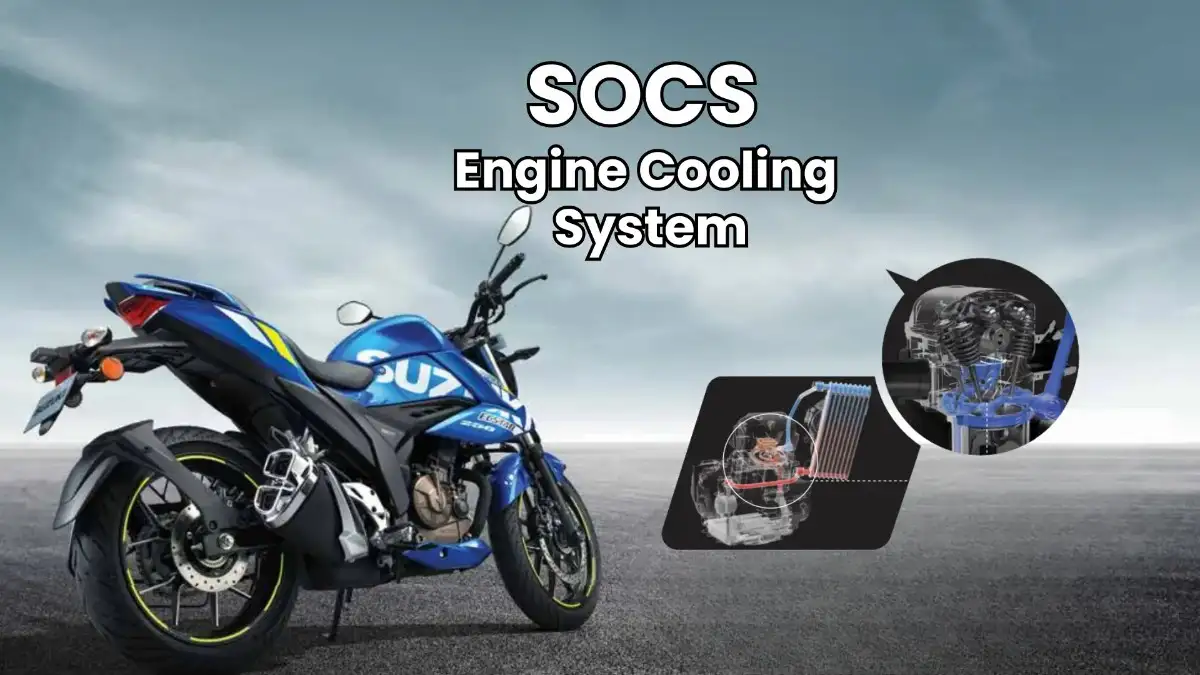
SOCS stands for Suzuki Oil Cooling System, a proprietary technology that revolutionized motorcycle cooling in the Indian market. But what makes it special? Traditional engines use oil purely for lubrication. SOCS takes this a step further by engineering the oil circulation system to remove heat from critical engine components actively.
The oil absorbs heat as it flows through the engine, then passes through an external oil cooler before returning to do its job again. It’s essentially a hybrid approach. You get the simplicity of air-cooling with the efficiency closer to liquid-cooling, all without the complexity and weight of a full radiator system.
Air-Cooled vs Oil-Cooled: The Real Difference
Let’s break down how these engine cooling systems stack up against each other in real-world conditions.
Meaning of Air-Cooled Engines
Air-cooled engines rely entirely on airflow across cooling fins. They’re simple, lightweight, and require minimal maintenance. However, they have significant limitations in hot climates. When you’re crawling through traffic at 10 km/h, there’s barely enough airflow to cool the engine effectively. That’s when you’ll notice:
- Reduced performance as the engine heats up
- Increased fuel consumption
- Rougher engine operation
- Faster wear on internal components
Meaning of SOCS Oil-Cooled Engines
The engine cooling system in SOCS-equipped bikes actively manages heat regardless of vehicle speed. Here’s what sets it apart:
Continuous cooling: The oil circulates even when you’re stationary, constantly removing heat from the engine. Your oil cooler works like a mini radiator, dissipating heat into the surrounding air.
Targeted heat removal: SOCS directs oil flow to the hottest engine components, the cylinder head and piston crown. This precision cooling prevents hot spots that can cause premature wear.
Dual functionality: The same oil that cools your engine also lubricates it, reducing the need for additional systems and keeping the bike lighter than liquid-cooled alternatives.
Why SOCS Excels in Indian Climate Conditions
India presents unique challenges for motorcycle engine cooling systems. Let’s talk about why SOCS is practically built for our roads.
The Traffic Challenge
Indian cities are notorious for stop-and-go traffic. In Metro Cities, you might spend 40% of your commute barely moving. Air-cooled engines suffer here because they depend on speed to generate cooling airflow.
SOCS maintains consistent cooling whether you’re cruising at 80 km/h on the highway or idling at a traffic signal. The oil pump keeps working, and the oil cooler continues dissipating heat.
Temperature Extremes
From Rajasthan’s 48°C summers to monsoon humidity, Indian weather tests every component of your bike. An effective engine cooling system isn’t optional but essential.
Research shows that engine oil temperatures in air-cooled engines can exceed 140°C in heavy traffic during the summer months. SOCS keeps temperatures 15-20°C lower on average, which translates directly to better engine longevity.
Fuel Quality Variations
Let’s be honest, fuel quality isn’t consistent across India. Lower-grade fuel burns less cleanly, generating more heat and deposits. SOCS’s superior cooling helps mitigate the effects of inconsistent fuel quality by preventing excessive temperature buildup.
Benefits of the SOCS Engine Cooling System
Theory is great, but what does SOCS mean for your daily ride? Here are the tangible benefits:
More Consistent Power Delivery
Ever noticed your bike feels sluggish after 30 minutes in traffic? That’s heat soak affecting performance. With SOCS engine cooling system technology, your bike maintains more consistent power output throughout your ride. You’ll experience:
- Better throttle response even in slow-moving traffic
- Smoother engine operation across the temperature range
- Less power loss during extended rides in hot weather
Extended Engine Life
Excessive heat is your engine’s worst enemy. Every 10°C increase in operating temperature can reduce engine component life by up to 50%. By maintaining optimal temperatures, SOCS significantly extends:
- Piston ring life
- Valve seal durability
- Overall engine longevity
Real-world data from motorcycle service centers suggests SOCS-equipped engines often run 40,000-50,000 km before requiring major services, compared to 30,000-35,000 km for comparable air-cooled engines in similar conditions.
Better Fuel Efficiency
Cooler engines run more efficiently. When your engine cooling system keeps temperatures in the optimal range, combustion is more complete, and friction is reduced.
Riders report fuel efficiency improvements of 2-4 km/l with SOCS compared to equivalent air-cooled engines, especially in urban riding conditions. Over a year, that’s significant savings.
Reduced Noise and Vibration
SOCS engines typically run quieter and smoother. The consistent cooling prevents thermal expansion issues that can cause increased mechanical noise and vibration as the engine heats up.
How to Maintain an Engine Cooling System?
SOCS technology adds minimal maintenance burden, but there are a few things you should know to keep your engine cooling system performing optimally.
Oil Changes: More Critical Than Ever
Since your oil is doing double duty, lubricating and cooling, maintaining oil quality is crucial. Follow these guidelines:
Change intervals: Stick to manufacturer recommendations religiously. For SOCS engines, this typically means every 3,000-4,000 km for mineral oil or 5,000-6,000 km for synthetic.
Oil quality matters: Don’t compromise on oil grade. SOCS engines require oils that can handle higher thermal loads. Using substandard oil defeats the purpose of having an advanced cooling system.
Watch for degradation: If your oil turns black quickly or develops a burnt smell, it’s working overtime. Consider shortening change intervals if you ride primarily in heavy traffic.
Oil Cooler Maintenance
The external oil cooler is your engine cooling system’s radiator equivalent. Keep it clean for optimal performance:
- Inspect for debris buildup every month
- Clean gently with compressed air or a soft brush
- Check for oil leaks around cooler connections
- Ensure mounting brackets are secure
A clogged oil cooler can reduce cooling efficiency by 30-40%, negating much of SOCS’s advantage.
Routine Inspections
Every 6,000 km or during regular service:
- Check oil level and quality
- Inspect oil lines for cracks or wear
- Verify oil cooler fins aren’t damaged
- Ensure proper oil pressure (mechanic can verify)
Is SOCS Right for Your Riding Style?
Not every rider needs SOCS technology, but certain situations make it nearly essential. Here’s how to decide if an oil-cooled engine cooling system suits your needs.
You’re a Perfect Candidate If:
You commute in heavy traffic: If your daily ride involves crawling through congested urban streets, SOCS will make a noticeable difference in engine performance and longevity.
You live in hot climates: Riders in northern and central India, where summer temperatures regularly exceed 40°C, benefit tremendously from SOCS’s superior heat management.
You take long rides: Planning weekend trips or touring? SOCS maintains consistent performance over extended periods, reducing fatigue from managing an overheating bike.
You value engine longevity: If you plan to keep your motorcycle for 50,000+ km, SOCS’s engine protection pays dividends in reduced maintenance costs.
Air-Cooling Might Suffice If:
You primarily ride in cooler climates with moderate traffic. If you’re cruising mountain roads in Himachal Pradesh or riding through pleasant weather with minimal stops, a well-designed air-cooled engine can serve you perfectly well while saving you a bit on initial purchase cost.
Making the Investment Decision
Motorcycles with SOCS engine cooling systems typically cost ₹5,000-₹15,000 more than their air-cooled equivalents. Is it worth it? Consider the math: better fuel economy saves ₹2,000-₹3,000 annually. Extended engine life reduces major service costs by ₹5,000-₹10,000 over the bike’s lifetime. For most Indian riders, SOCS pays for itself within 2-3 years.
More importantly, the improved riding experience, consistent power, cooler operation, and smoother performance are difficult to put a price on. When you’re not constantly worrying about engine temperature during your commute, that peace of mind is invaluable.
The Future of Engine Cooling Systems
As emissions regulations tighten and performance expectations rise, efficient engine cooling systems become increasingly critical. SOCS represents an elegant middle ground: sophisticated enough to handle India’s demanding conditions, simple enough to remain reliable and affordable.
Many manufacturers are now developing their own oil-cooling variants, recognizing what Suzuki pioneered decades ago. Technology continues evolving, with newer implementations featuring improved oil flow management and more efficient cooler designs.
Conclusion
The right engine cooling system can transform your riding experience in Indian conditions. SOCS technology offers a compelling combination of performance, reliability, and practicality that’s hard to beat for most riders. If you’re dealing with traffic jams, extreme heat, or simply want your motorcycle to last longer with consistent performance, an oil-cooled engine deserves serious consideration. The modest price premium pays dividends in daily riding satisfaction and long-term durability.
Remember: your engine is your motorcycle’s heart. Keeping it cool isn’t just about performance today; it’s an investment in thousands of enjoyable kilometers tomorrow. Ready to upgrade your ride? Visit your nearest dealership to experience SOCS technology firsthand. Your engine will thank you.
Recommended Resources
Society of Automotive Engineers India – Cooling Systems (External technical resource)
